
Lab-Grown Meat: 3 Health Myths vs Regulatory Approval
Separating verifiable science from internet fear-mongering to understand if cultured meat is actually safe for your dinner table.


Walking into a high-end grocery store in San Francisco or Singapore this year, you might spot the "cultivated" section sitting quietly next to the organic grass-fed beef. The packaging is sleek, the price tag is still eye-watering, and the shoppers hovering nearby often wear a look of confused suspicion. I have spent the last eighteen months digging into the files of the Food and Drug Administration (FDA) and the Singapore Food Agency (SFA), interviewing biotechnologists, and tracing the supply chains of this new industry. What I have found is that the regulatory hurdles have largely been cleared, yet the court of public opinion remains stuck on a few pervasive fears.
The gap between regulatory approval and consumer acceptance is not just about taste or price; it is about trust. People are genuinely terrified that we are rushing a sci-fi experiment onto our plates. While skepticism is healthy—especially regarding food safety—the narrative that lab-grown meat is an unregulated chemical cocktail is false. Both the US and Singapore have established rigorous frameworks to ensure these products are as safe, if not safer, than their slaughtered counterparts. We need to dissect the misinformation feeding this hesitation.
The "Chemical Soup" Fallacy
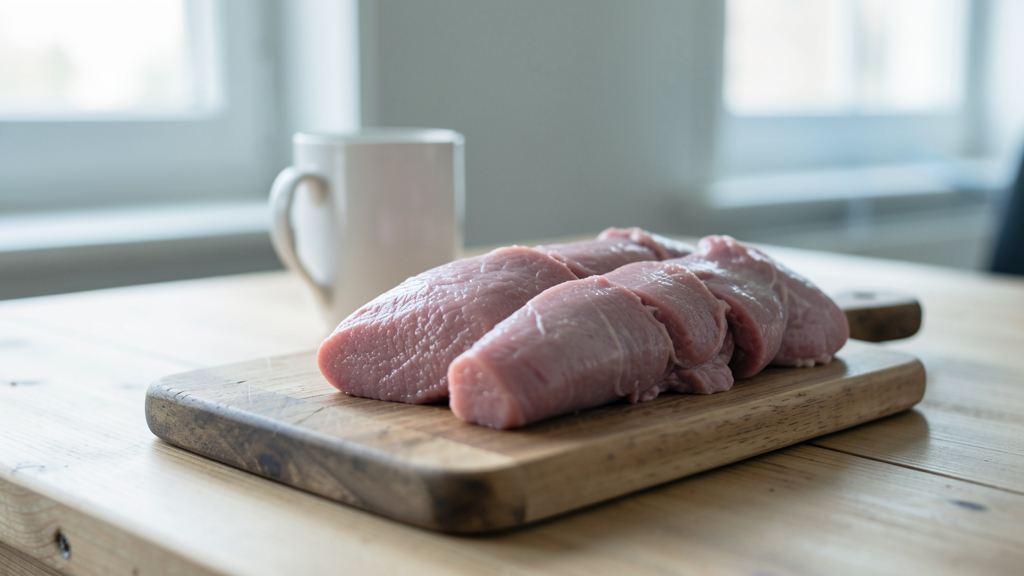
The most common objection I hear in comment sections and at dinner parties is that cultured meat is grown in a toxic bath of synthetic hormones and antibiotics. It is an understandable fear. We are used to meat coming from nature, not a stainless-steel vat. The imagery conjures up glowing green liquids and industrial sludge. But when you actually look at the ingredient lists approved by the FDA for companies like UPSIDE Foods or GOOD Meat, the reality is far more boring.
The culture medium—the liquid that feeds the cells—is essentially a nutrient broth. It contains amino acids, vitamins, minerals, and sugars. These are the same building blocks animals get from eating plants, just delivered more efficiently. Early prototypes did rely on fetal bovine serum (FBS), a byproduct of slaughter, but that practice has been economically and ethically phased out of commercial production. Today, companies use recombinant proteins or plant-based growth factors.
Regulators treat every component of this medium as a food additive, subjecting them to intense scrutiny. In the US, the pre-market consultation requires a company to prove that every molecule is Generally Recognized As Safe (GRAS). The idea that this is a "chemical soup" ignores the fact that conventional agriculture uses antibiotics and pesticides that end up in our water supply and meat. With cultivated meat, the production is sterile. You do not need prophylactic antibiotics because the bioreactor is a closed system. There is no risk of cross-contamination from manure. The process is arguably cleaner than a crowded feedlot, yet the "synthetic" label sticks because it sounds scarier than "natural," even if "natural" in this context includes E. coli outbreaks.
Do Immortalized Cells Pose a Cancer Risk?
This is the myth that stops the conversation cold. It stems from a fundamental misunderstanding of how the science works. To grow meat at scale, companies need cells that will divide enough times to produce a meaningful quantity of product. They often use "immortalized cell lines"—cells that can divide indefinitely. Critics immediately latch onto the word "immortalized," conflating it with cancer, and argue that eating these cells could transfer malignancy to humans.
It is a terrifying prospect, but biologically unfounded. The cell line used to create a chicken breast does not survive the digestion process. Your stomach acid breaks down the proteins and DNA into their constituent parts, just like it does when you eat a regular steak or a carrot. There is no mechanism for a foreign cell line to colonize your gut or alter your DNA. The cells are "immortal" only in the specific, controlled environment of the bioreactor. Once harvested, processed, and cooked, they are biologically dead tissue.
From a regulatory standpoint, the FDA demands exhaustive data on the characterization of these cell lines. They check for genetic stability and ensure that the cells are not tumorigenic. If a cell line shows signs of instability, it is rejected. The safety protocols are tighter than those for many pharmaceuticals. The fear here is driven by the "yuck factor" rather than oncology. We have been consuming cells from animals that may have had cancer for centuries; the difference here is that the lab-grown product is screened, whereas a tumor in a cow at a slaughterhouse might just be cut out and the rest sold. I would argue the controlled nature of the former offers a higher safety margin.
Is Cultured Meat Nutritional Void?
There is a lingering belief that because the meat is "manufactured," it lacks the complex nutritional profile of meat that comes from an animal that lived a life. Skeptics claim it is essentially protein-flavored mush, devoid of iron, B12, and the other micronutrients that make meat valuable in the human diet.
The reality is that the nutritional profile of cultured meat is not just comparable; it is adjustable. In a traditional animal, you get what you get. If the cow was stressed or malnourished, the quality of the meat suffers. In a bioreactor, the nutrient input dictates the output. By tweaking the culture medium, manufacturers can actually increase the levels of beneficial compounds like omega-3 fatty acids or reduce saturated fats. It is precision nutrition.
The data submitted to the SFA in Singapore for the approval of Eat Just’s cultured chicken showed that the protein, fat, and carbohydrate content were virtually identical to conventional chicken. Furthermore, because the product is grown in a sterile environment, it avoids the bioaccumulation of heavy metals like mercury or dioxins often found in seafood, or the environmental toxins that grazing animals ingest. This technology allows us to strip away the variables of nature—drought, soil depletion, pollution—that impact food quality. To dismiss it as nutritionally empty is to ignore the potential to engineer a healthier product than nature can provide on its own. This precision is crucial as we look toward a future where food security becomes increasingly vulnerable to climate shifts.
The Real Cost of Fear
The regulatory hurdles are largely behind us. The science is sound. The persistence of these myths does more than just slow down sales; it distracts from the urgent conversation we need to be having about the environmental and ethical costs of our current food system. We are seeing record-breaking temperatures, and the livestock sector remains a massive contributor to methane emissions. Yet, we are arguing about phantom cancer risks.
I am not saying you should blindly trust corporations. The industry requires transparency and ongoing monitoring. We must ensure that the "clean" promise of cultivated meat does not hide energy-intensive production methods that negate its climate benefits. However, refusing to engage with this technology based on debunked health scares is a mistake.
The transition to lab-grown meat will not happen overnight. It is expensive, and the texture is not perfect. But writing it off as a health hazard ignores the rigorous vetting these products have undergone in both the US and Singapore. The science is there. The regulations are in place. The only thing missing is the willingness to look past the fear.