
Can the President Actually Use the Military for Domestic Border Control?
An examination of the Insurrection Act and Posse Comitatus limitations reveals the complex legal reality behind presidential calls for military deployment at the southern border.


The rhetoric surrounding the southern border has reached a fever pitch in 2026, with escalating demands for federal intervention. In campaign rallies and congressional hearings, the proposition of deploying the U.S. military for domestic law enforcement and border control is frequently presented as a ready-made solution to enforcement gaps. However, the transition from campaign rhetoric to operational reality involves navigating a labyrinth of constitutional statutes that were specifically designed to keep the military out of civilian policing.
The core of the issue lies not in the President’s will, but in the law. The Posse Comitatus Act of 1878 serves as the primary hurdle, prohibiting the use of the federal military for domestic law enforcement unless explicitly authorized by the Constitution or an Act of Congress. While the headlines often simplify the debate, the actual legal mechanism rests on the exceptions to this rule, primarily the Insurrection Act of 1807.
The Legal Barrier Erected in 1878
To understand the current debate, one must look back at the post-Reconstruction era. The Posse Comitatus Act was passed to end the use of federal troops to supervise elections in the South. Originally applying only to the Army, it has since been amended to include the Air Force and, by Department of Defense regulation, the Navy and Marine Corps. The statute’s intent is clear: the United States should not have a military force acting as a domestic police body.
In 2026, this statute remains the default position. It means that active-duty soldiers cannot arrest, search, or seize American civilians on U.S. soil. This creates an immediate friction point when border enforcement is discussed, as crossing the border illegally is a federal crime, and immigration enforcement is fundamentally a law enforcement function, not a military one.
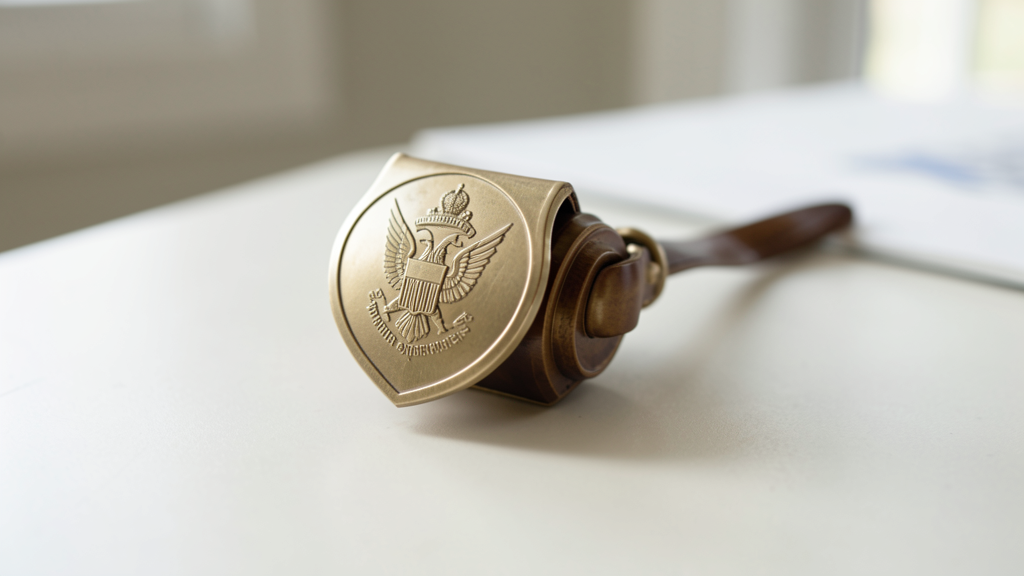
However, the Act is not an absolute prohibition. It contains explicit exceptions that allow for the military to be used to support civilian law enforcement under specific circumstances, such as responding to threats involving nuclear materials or assisting with drug interdiction. Yet, these are support roles—logistics, intelligence, equipment—not direct law enforcement.
When Can the Insurrection Act Be Triggered?
The Insurrection Act is the "nuclear option" that overrides Posse Comitatus. It allows the President to deploy Active Duty military personnel within the United States to suppress lawlessness, insurrection, or rebellion. The power is broad, but it triggers only under specific conditions outlined in Title 10 U.S.C. § 251-255.
Section 251 requires a request from the state legislature or governor, which is unlikely in a scenario where a state opposes federal intervention. Section 252 is more relevant to the current border discourse; it allows the President to deploy troops to enforce federal laws against "unlawful obstructions, combinations, or assemblages, or rebellion."
This is where the legal arguments get heated. Could a President argue that a surge in migrant crossings constitutes an "unlawful obstruction" or a "rebellion" against federal authority? It is a novel legal theory. Historically, this section was used to protect civil rights activists in the late 1950s. Invoking it to treat migration flows as a rebellion would almost certainly face immediate judicial challenge. The Supreme Court has historically been skeptical of unilateral executive power in domestic affairs, a precedent established in Youngstown Sheet & Tube Co. v. Sawyer (1952), which struck down President Truman's seizure of steel mills during the Korean War.
The Constitutional Question of "Invasion"
Article IV, Section 4 of the U.S. Constitution states that the United States "shall protect each of [the States] against Invasion." In recent political cycles, some legal scholars and political figures have argued that large-scale unauthorized border crossings meet the constitutional definition of an "invasion," thereby triggering the executive's duty to deploy military force without needing to invoke the Insurrection Act's standard provisions.
This argument attempts to bypass the statutory restrictions of Posse Comitatus by appealing to a higher constitutional power. If the border situation is defined as an "invasion," the limitations on using the military for law enforcement theoretically dissolve.
Critics argue this is a tortured interpretation of the text. The constitutional framers used "invasion" in the context of hostile foreign military forces, not migrants seeking entry. The federal courts have never validated this interpretation. If a President attempted to use the "invasion" clause to deploy Active Duty troops for arrests and detentions, the legal battle would likely reach the Supreme Court within months. The outcome is unpredictable, but it would force the judiciary to define the limits of executive power in a way that has not been tested in the modern era.
Distinguishing the National Guard from Active Duty
A critical distinction often lost in the noise is the difference between National Guard troops and federal Active Duty forces. The National Guard operates under a "dual-status" concept. When a Governor deploys the Guard, they are state employees, funded by the state, and not bound by Posse Comitatus. This allows them to perform law enforcement duties directly at the border if the state chooses.
However, the President can "federalize" the Guard, placing them under Title 10 status. If federalized, Posse Comitatus applies, and their law enforcement capabilities vanish.
In 2026, we see a patchwork of Guard deployments along the border, authorized by state governors under Title 32 status. These troops are building barriers, providing medical support, and operating surveillance drones, but their rules of engagement are dictated by state law, not federal war-fighting doctrine. This state-level mobilization is politically safer and constitutionally sounder than federalization, yet it lacks the unified command structure many in Washington are calling for.
The Final Arbiter: Judicial Intervention
Ultimately, the checks and balances system suggests that the judiciary would act as the final stop on an unchecked military deployment. If a President attempts to stretch the Insurrection Act or the "invasion" clause to a degree the courts view as a violation of separation of powers, injunctions will follow swiftly.
The political cost of such a move would also be astronomical. Using the military for domestic policing is viewed by many civil libertarians on both sides of the aisle as a dangerous step toward authoritarianism. While 5 Campaign Promises That Usually Get Broken Before Inauguration often revolve around economic policy, the pledge to militarize the border without congressional support frequently meets the hard wall of legal reality once a candidate takes office.
Furthermore, the way these narratives spread often complicates the legal reality. How the Online Disinformation Bill Passes in 3 Stages highlights the legislative struggle to manage misinformation that simplifies complex legal precedents into "the President can just do it." When the public is told the executive has absolute power, the shock of judicial restraint is interpreted not as the system working, but as the system failing.
The President does have significant powers, but they are not plenary. The Founders designed a system where using the military against the populace—or within the country's borders—is an option of last resort, hedged by statutes and judicial oversight. While the executive can move ships and planes, the ability to use them as a domestic police force remains legally constrained, regardless of how urgent the political crisis becomes.