
Are Smart Glasses Actually Recording You Without Consent?
A technical deep-dive into the hardware safeguards and policy loopholes of the latest Meta and Ray-Ban wearables reveals the uneasy reality of public surveillance in 2026.


The arrival of the Ray-Ban Meta Ultra collection in early 2026 marked a turning point for wearable technology. No longer clunky headsets obvious to everyone in the room, these frames look indistinguishable from standard eyewear. This aesthetic success has birthed a pervasive anxiety: as you sit across from a colleague or wait in line for coffee, are the lenses staring back at you capturing video, or is the wearer just looking at their phone? The answer lies not in speculation, but in a rigorous examination of the hardware interlocks and the shifting legal language governing these devices.
The Hardware Sanctuary of the White LED
The primary defense against surreptitious recording has always been the capture indicator. For the latest generation of smart glasses released this year, both Meta and EssilorLuxottica have maintained a specific hardware requirement: a hardwired white LED located on the inner rim of the frame, just above the temple.
This light is not merely a software-driven icon. Technical teardowns conducted by independent hardware labs in March 2026 confirmed that the LED is wired in series with the camera’s power circuit on the printed circuit board (PCB). In theory, this means that if the camera sensor receives power to capture an image or video stream, the circuit to the LED is physically closed, illuminating the light. It is a "fail-safe" design intended to prevent software updates from ever disabling the light while the camera remains active. If a hacker or a malicious internal actor attempted to patch the firmware to disable the LED, the physical architecture of the 2026 Ray-Ban Meta Wayfarer 4 would theoretically cut power to the camera sensor simultaneously.
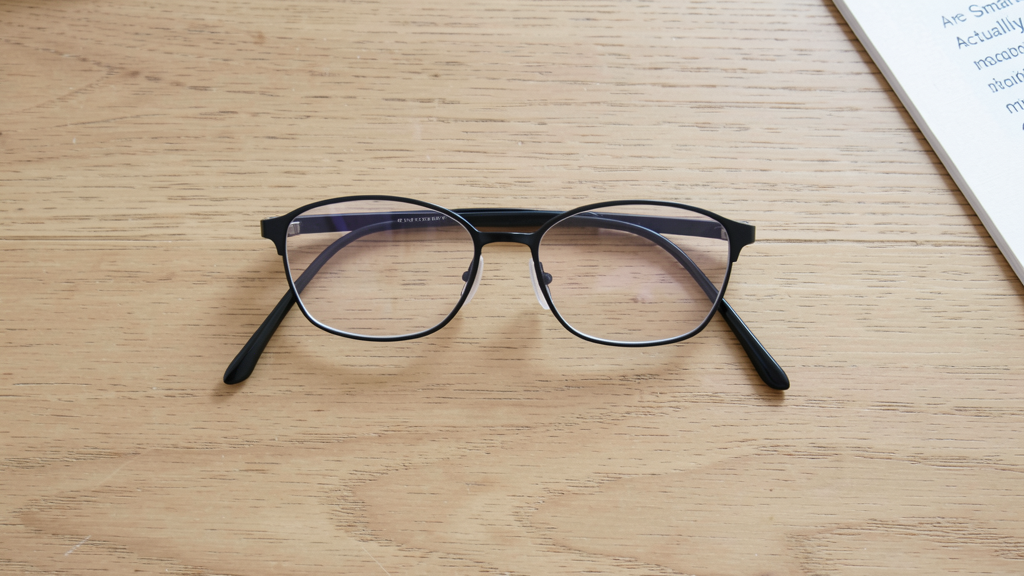
However, hardware interlocks are only as reliable as the components regulating them. While the LED is difficult to bypass via software, it is not impossible to obscure. The physical reality of the device allows for low-tech circumvention. A simple strip of opaque tape or a dab of resin applied by the wearer over the LED would render the hardware safeguard invisible to the subject, even if the light is actively blazing behind the obstruction. Furthermore, the LED's position—facing slightly inward—means it is only clearly visible to someone standing directly in front of the wearer at eye level. In a crowded subway car or a busy intersection, the status of that light goes largely unnoticed.
Parsing the Legal Language of Biometric Consent
While the hardware attempts to signal recording, the software policies dictate what happens to that data once it is captured. The updated Meta Privacy Policy, effective January 2026, contains a crucial clause regarding "ambient audio and visual data." The policy states that while raw photos and videos are stored locally or in the user's cloud, metadata derived from these inputs—specifically facial embeddings and environmental vectors—may be retained for up to 90 days for "product improvement and AI training."
This distinction creates a gray area of consent. When a user captures a video of a public park, the subjects in the background have technically consented to being recorded in a public space. However, they likely have not consented to having their facial geometry analyzed, hashed, and stored by a neural network to improve future recognition algorithms. This is reminiscent of the incident where it took AI just 6 minutes to fake a CEO's voice and steal $25m, highlighting how quickly biometric data can be weaponized. The value of smart glasses lies not just in the recording, but in the immediate analysis of the scene.
The policy further stipulates that "Live Streaming" features utilize a different data pipeline. When a user initiates a stream to Instagram or WhatsApp, the data is treated as real-time communication content. Yet, the glasses support a feature called "Look and Ask," a context-aware AI assistant that processes the visual field to answer queries about objects or text. When this feature is active, the camera is capturing frames continuously to process the query. Although the LED remains lit during this operation, the user is not "recording" a video in the traditional sense, creating a discrepancy between what the user feels they are doing (asking a question) and what the device is doing (capturing and analyzing your environment).
The Modding Community and the Right to Repair Paradox
A less discussed but growing threat to privacy comes from the modification of the hardware itself. As smart glasses age, they enter the secondary market, where they attract tinkerers and developers. The Right to Repair law passed in Oregon was a landmark victory for consumers, requiring manufacturers to make repair manuals and parts available. While this legislation extends the lifespan of electronics and reduces e-waste, it also lowers the barrier for altering the device's intended function.
With access to the schematics and service guides for the 2026 models, skilled technicians can physically disconnect the LED bridge and reroute the power to keep the camera operational. While this voids the warranty and violates the Terms of Service, it is mechanically feasible. A modified pair of glasses purchased on a resale platform could theoretically record without any visual indicator. The "Right to Repair" movement, while ethically sound regarding sustainability, inadvertently complicates the landscape of surveillance tech. It democratizes the ability to alter hardware safety features, shifting the trust from the manufacturer to the individual seller of a used device.
We must also consider the ecosystem of third-party apps. While the native operating system enforces the LED rule, the approval process for third-party developers has faced criticism. In a security audit released last November, researchers found that certain beta SDKs allowed for high-frequency frame capture—essentially rapid-fire photography—that could mimic video with a lower frame rate, sometimes causing the LED to pulse rather than shine steadily. To the untrained eye, a pulsing light might appear as a notification glitch rather than a recording warning.
Digital Exhaust vs. Physical Incursion
The anxiety surrounding smart glasses often overshadows the surveillance already happening in our pockets. We tolerate smartphones because the act of lifting a device and pointing it is a distinct social signal. Smart glasses remove that friction. This is the core friction point: the removal of the social friction of recording.
It is worth comparing this to the ongoing debate over whether Chrome or Safari blocks trackers better after the new law. Digital tracking is invisible, but we have developed software shields like ad-blockers and anti-tracking headers to manage it. Physical tracking via smart glasses requires a physical solution, which society has not yet agreed upon. You cannot install an ad-blocker for someone’s eyewear.
The ambiguity of "consent" is central here. In a private residence, laws regarding hidden cameras are strict. In a public square, the expectation of privacy is significantly lower. However, the scale and permanence of data collection by smart glasses differ fundamentally from a passing glance. The data is timestamped, geotagged, and uploaded to a server where it can be indexed. The memory of a human observer fades; the memory of the cloud does not.
The Verdict on Everyday Surveillance
So, are they recording you without consent? If the device is operating as intended by the manufacturer, strictly speaking, no—the hardware interlocks make covert recording functionally impossible without physically altering the glasses. The white LED is a robust safeguard against software-based spying.
However, relying on this assurance requires a high degree of trust that the hardware has not been modified or obscured. The reality of 2026 is that while the technology giants have implemented strong hardware guards to protect their brand from regulation, the physical vulnerability of the device remains. A piece of tape, a soldering iron, or a clever third-party exploit can bypass the ethical barriers built into the system.
The privacy policies grant the companies broad license to analyze what the glasses see, meaning that even if you are not being "recorded" in the sense of a video file being saved to a reel, your biometric data is likely being processed. Consent has become a passive agreement, buried in Terms of Service updates, rather than an active, informed choice. The glasses are not just looking at you; they are translating you into data points, and that is a distinction that matters far more than the status of a tiny white light.
As we move toward a future where these devices become as ubiquitous as smartphones, the solution will likely not be technical but legislative. We are approaching an era where "visual privacy"—the right not to be biometrically analyzed in public—will need the same rigorous defense that digital privacy enjoys today. Until then, the only true certainty is that when the lenses are pointed your way, you are part of the dataset.